Canadian dollar extends losing streak as Venezuelan oil fears weigh
USD/CAD continues to climb as traders weigh a potential U.S. revival of Venezuelan crude and its impact on Canadian oil exports.


The Canadian Dollar continued to fall against the U.S. Dollar on Wednesday, with USD/CAD rising about 0.4% through the US trading session. This marks the eighth consecutive daily loss against the dollar for the Canadian currency, marking the weakest trading level since early December.
USD/CAD is now on track for its longest losing streak since March 2025. Traders are concerned that a U.S. effort to revive Venezuela’s crude industry could impact Canada’s oil exports, which are primarily heavy crude exported to the United States—the same type that Venezuela produces.
Crude oil prices were also down on Wednesday, dropping by about 1.4% in afternoon trading. The Canadian Dollar is commodity-linked but it doesn’t always react to oil price swings. The displacement fears for Canada’s exports are likely impacting prices, but those fears may be overblown since Canada’s oil is a stable source for the United States.
Comparatively, Venezuelan oil would require billions of dollars in investment and years of work on infrastructure before realistically threatening Canadian supply. Still, the U.S. administration seems locked in on reviving the country’s oil complex as a strategic source of oil.
The move comes at a time when Canada is attempting to diversify its oil exports away from the United States amid ongoing trade tensions. Prime Minister Mark Carney is set to visit China next week and oil is expected to be part of those discussions. Tomorrow, Canada’s trade data for October is expected to cross the wires.
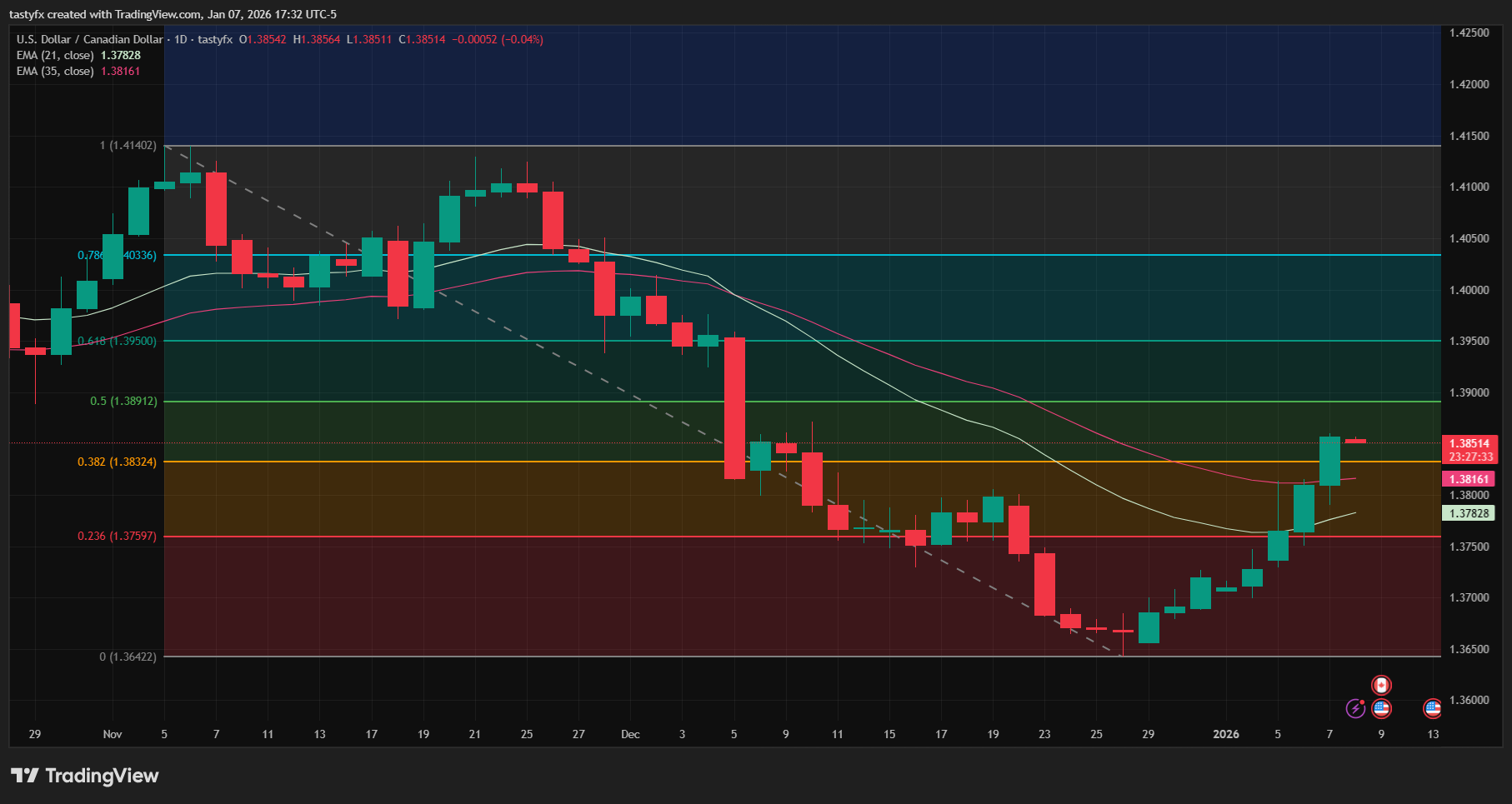
Technically, USD/CAD appears strong after the pair crossed above its 21- and 35-day exponential moving averages (EMAs) over the past week. A swing high level from early December could offer some resistance, but it’s not until the October swing low that notable resistance from prior support comes into play at around 1.38888, an intraday low that coincides with the pseudo 50% Fibonacci retracement level from the November to December range.
If momentum wanes, then a pullback to the previously mentioned EMAs is a likely area where there could be some consolidation. The 23.6% Fibonacci level also has seen some congestion, which could come back into play. Overall, the trend is in place, but oil prices will likely have some influence on how prices play out for the rest of the week.
USD/CAD Daily Price History
Trading forex requires an account with a forex provider like tastyfx. It’s important to manage your risks carefully as losses can exceed your deposit. Ensure you understand the risks and benefits associated with trading leveraged products before you start trading with them.